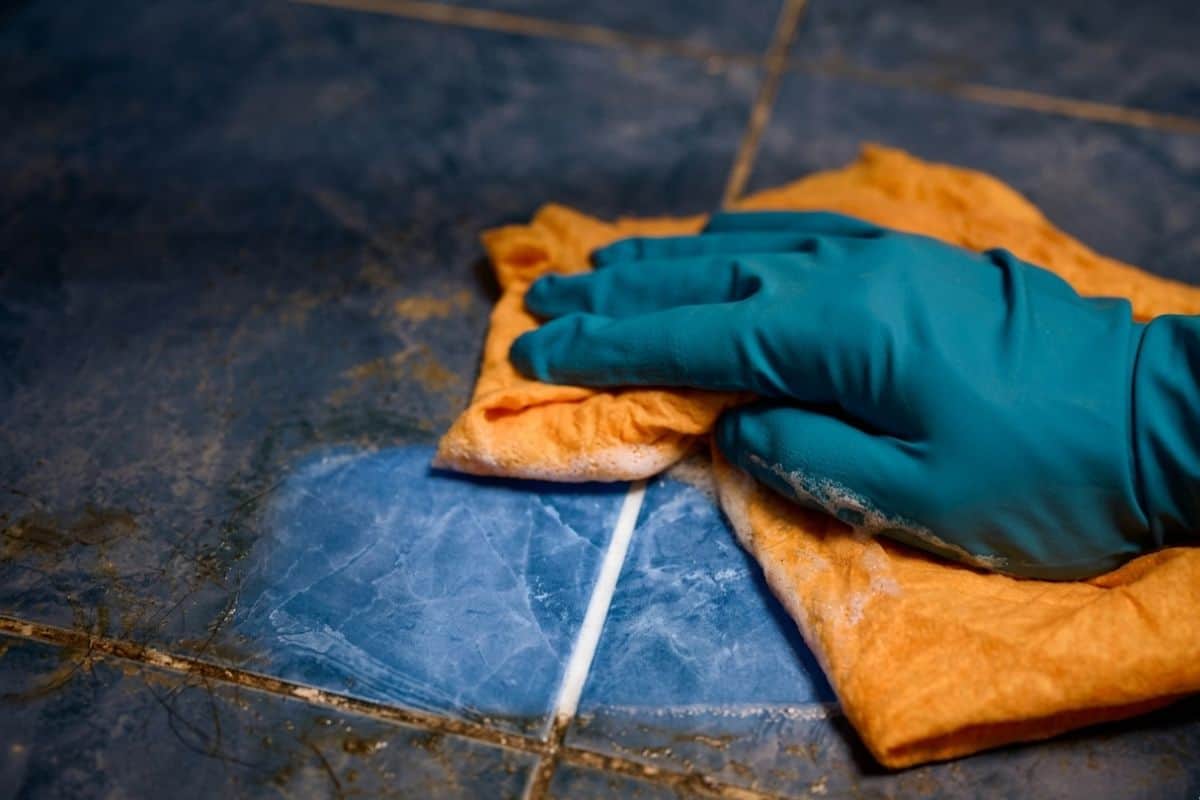
The best way to deep clean kitchen floor tiles is to combine a pH-balanced solution, proper dwell time, and high-pressure hot water extraction—a method that lifts trapped grease and grime from both the tile surface and the porous grout lines beneath.
If you live in Tulsa, OK, and your kitchen floor has started looking dingy no matter how often you mop, you are not alone. Kitchen tiles take more abuse than almost any other surface in your home, and standard mopping only pushes dirty water deeper into the grout.
This guide will walk you through how to restore your kitchen tile to a like-new finish, why DIY methods often fall short, and when it makes sense to call in the professionals.
Why Kitchen Tile Floors Get So Dirty So Fast
Kitchens are the hardest-working rooms in any house. Between cooking splatters, dropped food, pet foot traffic, spilled drinks, and the constant moisture in the air, your tile floor is absorbing far more contamination than you realize. Grease particles from sautéing and frying become airborne and eventually settle on the floor, mixing with dust to form a sticky film. That film bonds to the slightly textured surface of ceramic and porcelain tile and works its way into the tiny pores of unsealed grout.
Once embedded, this grime is no longer something a damp mop can lift. In fact, traditional mopping makes the problem worse over time because dirty mop water flows directly into the grout lines, where it sits and darkens the cement-based material. After a few months of this cycle, homeowners across Tulsa start noticing the same thing: tiles look hazy, grout lines have turned gray or brown, and the whole kitchen feels less clean even after a fresh wipe-down.
The Best Way to Deep Clean Kitchen Floor Tiles Step by Step
A proper deep clean is a process, not a quick scrub. Here is the sequence that delivers real, visible results — and the order matters more than most people think.
Start by clearing the entire floor. Move chairs, rugs, pet bowls, and trash cans out of the way so you can access every tile and every grout line without obstruction. Dry-sweep or vacuum thoroughly, paying close attention to corners and the edges where the floor meets cabinets and baseboards. Loose debris left behind will turn into mud the moment you introduce moisture.
Next, choose a cleaning solution suited to your tile type. Ceramic and porcelain can handle a stronger alkaline cleaner, which is ideal for cutting through kitchen grease. Natural stone tiles like travertine, slate, or marble require a pH-neutral cleaner — acidic or highly alkaline products will etch and dull the surface permanently. Apply the solution generously and let it dwell for ten to fifteen minutes. This is the step most homeowners skip, and it is the single biggest reason DIY cleaning underperforms. Dwell time is what allows the chemistry to break the bond between grime and tile.
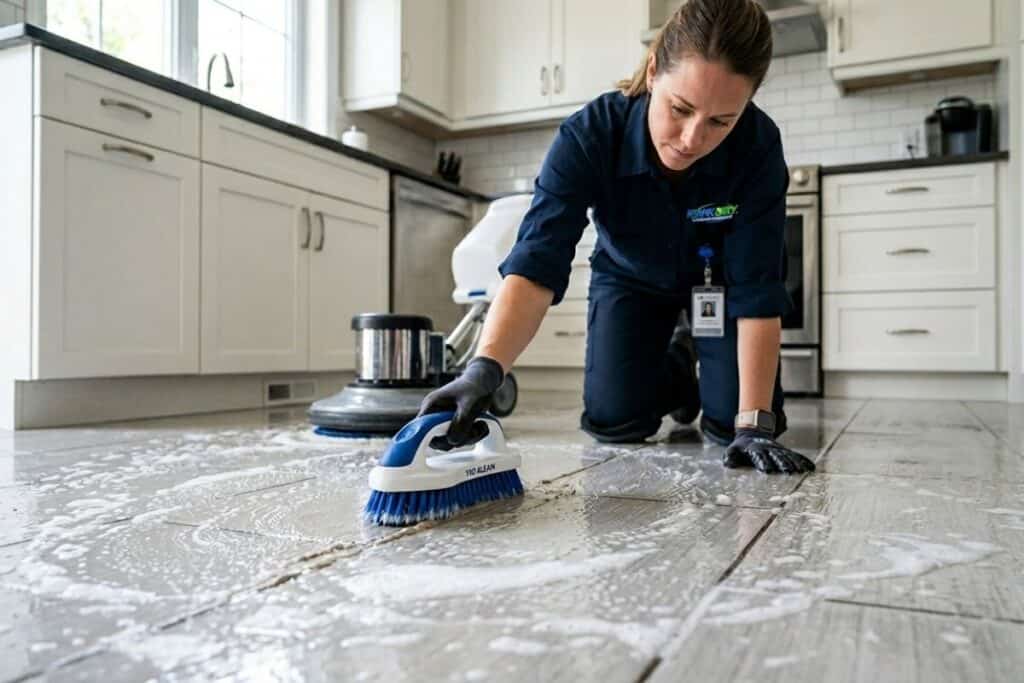
While the solution sits, agitate the grout lines with a stiff nylon brush. Avoid wire brushes, which can scratch tile and damage grout. Work in small sections so the cleaner does not dry on the surface. After agitation, the critical step is extraction. Rinsing with a mop spreads the dissolved dirt around. A wet vacuum, or even better, a truck-mounted hot water extraction unit, pulls the suspended grime completely out of the grout lines.
Finish by drying the floor with clean microfiber towels and inspecting your grout. If it still looks discolored after a thorough deep clean, the grout itself has likely absorbed the stain permanently and may need to be color-sealed to restore a uniform appearance.
DIY vs. Professional Tile Cleaning: What You Need to Know
Many Tulsa homeowners try the vinegar-and-baking-soda route they saw on social media. While these ingredients are not harmful in small doses, they have serious limitations. Vinegar is acidic and can erode grout over time and damage natural stone. Baking soda leaves a gritty residue that has to be rinsed thoroughly. Neither one has the surfactant power to lift heavy kitchen grease, and neither addresses the extraction problem.
Here is what professional tile and grout cleaning brings to the table that home methods cannot:
- Truck-mounted equipment that reaches water temperatures over 200°F to dissolve grease on contact
- Industrial vacuum extraction that pulls dirty solution out of grout instead of pushing it deeper
- Commercial-grade cleaners formulated for specific tile types, with no risk of etching or hazing
- Optional grout sealing that prevents future staining for up to three years
- Trained technicians who identify cracked grout, loose tiles, or moisture issues before they worsen
The difference is dramatic. A professional deep clean typically takes a fraction of the time and delivers results that a mop and bucket cannot.
Ready to see your kitchen tile floor look brand new again? Call Tulsa Kwik Dry Total Cleaning today and schedule a professional tile and grout cleaning service that delivers results you can see and feel.
How Often Should You Deep Clean Kitchen Tile in Tulsa Homes?
Tulsa’s climate plays a real role in how quickly kitchen floors get dirty. The combination of red clay dust tracked in from outside, high summer humidity, and seasonal pollen creates a perfect storm for tile and grout. Most homes benefit from a professional deep clean every twelve to eighteen months, with light maintenance mopping in between. Households with children, multiple pets, or frequent entertaining may need service every 9 months to prevent grout from permanently setting in stains.
Why Choose Tulsa Kwik Dry Total Cleaning
When it comes to restoring kitchen tile floors in Tulsa, OK, Tulsa Kwik Dry Total Cleaning is the trusted choice for homeowners who want lasting results without the hassle. Our team uses advanced low-moisture and hot-water extraction systems, specifically calibrated for ceramic, porcelain, and natural stone surfaces. We do not use harsh chemicals that linger in your home, and we never cut corners on dwell time or extraction — the two things that separate a real deep clean from a surface wipe.
Every technician on our crew is locally trained, background-checked, and experienced with the specific tile-and-grout challenges Tulsa homes face. From red clay soil to hard-water mineral buildup, we know what we are dealing with and how to treat it. We also offer optional grout color sealing to keep your floors protected long after we leave.
Conclusion
Deep cleaning kitchen floor tiles is not about working harder with a mop — it is about using the right method, products, and equipment in the right order. Whether you take on the project yourself or bring in a professional team, understanding the process is the first step to a healthier, better-looking kitchen. For Tulsa homeowners ready to skip the guesswork and get guaranteed results, professional cleaning is the smartest investment you can make in your floors.
Schedule your appointment with Tulsa Kwik Dry Total Cleaning now and discover why so many Tulsa families trust us with their floors. Your kitchen deserves more than a mop — give it the deep clean it has been waiting for.
Frequently Asked Questions
Can I use bleach to clean my kitchen tile grout?
Bleach can temporarily lighten the appearance of grout, but it breaks down the cement binders over time and can cause grout to crumble. It also does not actually remove embedded grease and dirt — it only discolors it. Safer alkaline or oxygen-based cleaners are more effective for long-term results.
Why does my grout look dirty again so quickly after cleaning?
This usually means the grout was never properly cleaned, so the dirty water dried back into the pores. Unsealed grout also absorbs new spills almost immediately. Professional extraction followed by a quality sealer solves both problems.
Is steam cleaning safe for kitchen tile floors?
Steam can be safe for sealed ceramic and porcelain, but it can drive moisture into grout and force it under tiles, where adhesive can weaken. On natural stone, prolonged exposure to steam may cause discoloration. Hot water extraction is generally a gentler and more effective option.
How long does it take for tile floors to dry after a professional cleaning?
Most kitchen tile floors are dry within thirty minutes to two hours after a professional cleaning, depending on humidity and ventilation. Low-moisture systems dry significantly faster than rental steam machines.
Will deep cleaning damage my grout or tile?
When done correctly with the appropriate pH cleaner and proper technique, deep cleaning will not damage tile or grout. Damage typically occurs from acidic homemade solutions, wire brushes, or aggressive scrubbing on natural stone surfaces.