What lives in your mattress is something most people would rather not think about, but the truth is both fascinating and a little unsettling. Every night, while you sleep peacefully in Tulsa, OK, your mattress hosts a thriving world of microscopic life.
From shed skin cells to moisture to warmth, your bed offers the perfect environment for tiny organisms to set up camp. The good news is that understanding what’s actually down there is the first step toward sleeping cleaner, breathing easier, and protecting your family’s health. Let’s pull back the covers on science.
The Hidden Ecosystem Beneath You
Your mattress is far more than a comfortable place to rest. Over years of use, it gradually accumulates an estimated tens of thousands of dead skin cells every single day, along with sweat, body oils, and ambient humidity. Together, these create a warm, moist, food-rich habitat that microscopic creatures find irresistible. Researchers have long noted that the average used mattress can harbor populations of organisms numbering in the hundreds of thousands to millions, depending on its age and the conditions of the home.
The reality is that no amount of nightly tidying changes this. You can wash your sheets every week and still have a mattress quietly accumulating biological debris beneath the surface. That debris doesn’t just sit there harmlessly. It feeds an entire population of dust mites, fungi, and bacteria that live and reproduce deep within the layers of foam and fabric where vacuuming and surface cleaning can’t reach.
Meet the Dust Mite: Your Bed’s Most Common Resident
Dust mites are the headline act of the mattress ecosystem, and they’re worth understanding in detail. These creatures are arachnids, distant relatives of spiders and ticks, measuring only about a quarter to a third of a millimeter long. That makes them completely invisible to the naked eye. You could be staring directly at thousands of them and never know it.
What makes dust mites so successful is their diet. They don’t bite humans, and they don’t spread disease the way mosquitoes or ticks do. Instead, they feast almost exclusively on the dead skin flakes that humans and pets shed constantly. Since a single person sheds enough skin in a day to feed thousands of mites, your mattress becomes an all-you-can-eat buffet that never closes.
Dust mites also love humidity. They absorb moisture directly from the air rather than drinking, which is why they flourish in bedrooms where body heat and perspiration keep things warm and damp. In Oklahoma’s humid stretches, mattresses can become especially hospitable to these tiny tenants. A typical mattress that’s several years old may contain anywhere from 100,000 to 10 million dust mites.
Why Dust Mites Matter for Your Health
Here’s where the facts get personal. While dust mites themselves are harmless in the sense that they won’t bite or infect you, the problem lies in what they leave behind. Throughout their short lives of roughly 2 to 3 months, dust mites continuously produce waste and leave behind their decomposing bodies. These droppings and fragments contain potent proteins among the most common indoor allergens worldwide.
When these microscopic particles become airborne, which happens every time you roll over, sit on the bed, or fluff a pillow, they get inhaled. For many people, this triggers an immune response. The result can be sneezing, a runny or stuffy nose, itchy or watery eyes, coughing, and postnasal drip. For people with asthma, dust mite allergens are a well-documented trigger that can worsen wheezing and shortness of breath, particularly at night and in the early morning hours when exposure is highest.
Children, elderly family members, and anyone with respiratory sensitivities tend to feel these effects most acutely. Many people who wake up congested every morning assume they’re fighting a constant cold or seasonal allergies, when in reality, their own mattress is the source. That realization alone is often the “wow, I need to save this” moment for homeowners across Tulsa.
Ready to reclaim your bed? Call Tulsa Kwik Dry Total Cleaning today and let our team give your mattress the deep clean it deserves.
Beyond Dust Mites: Other Mattress Inhabitants
Dust mites may be the most famous residents, but they aren’t alone down there. Bacteria thrive in the warm, moist environment, feeding on sweat and skin oils. Fungal spores and mold can take hold in mattresses exposed to humidity or spills that never fully dry. Pet dander works its way deep into the fibers if animals share your bed. And in some cases, the body oils and dead skin that accumulate over time create stains and odors that no amount of Febreze can mask.
The key insight is that all of these inhabitants share the same root cause: organic buildup that surface cleaning leaves untouched. Flipping the mattress, using a protector, and laundering bedding all help slow the accumulation, but they don’t remove what has already worked its way into the deeper layers. That requires a different approach entirely.
How to Fight Back Against Mattress Dwellers
Reducing the population of organisms in your mattress comes down to attacking the conditions they depend on: food, moisture, and undisturbed time. Here are the most effective strategies homeowners can use:
- Wash bedding weekly in hot water to kill mites living in sheets, pillowcases, and blankets before they migrate deeper into the mattress.
- Use a quality mattress protector that creates a barrier between you and the layers below, limiting how much of your skin and moisture reaches the interior.
- Lower bedroom humidity with a dehumidifier or air conditioning, since dust mites struggle to survive in drier air.
- Vacuum the mattress surface regularly with a HEPA-filter vacuum to remove loose debris and allergens from the top layer.
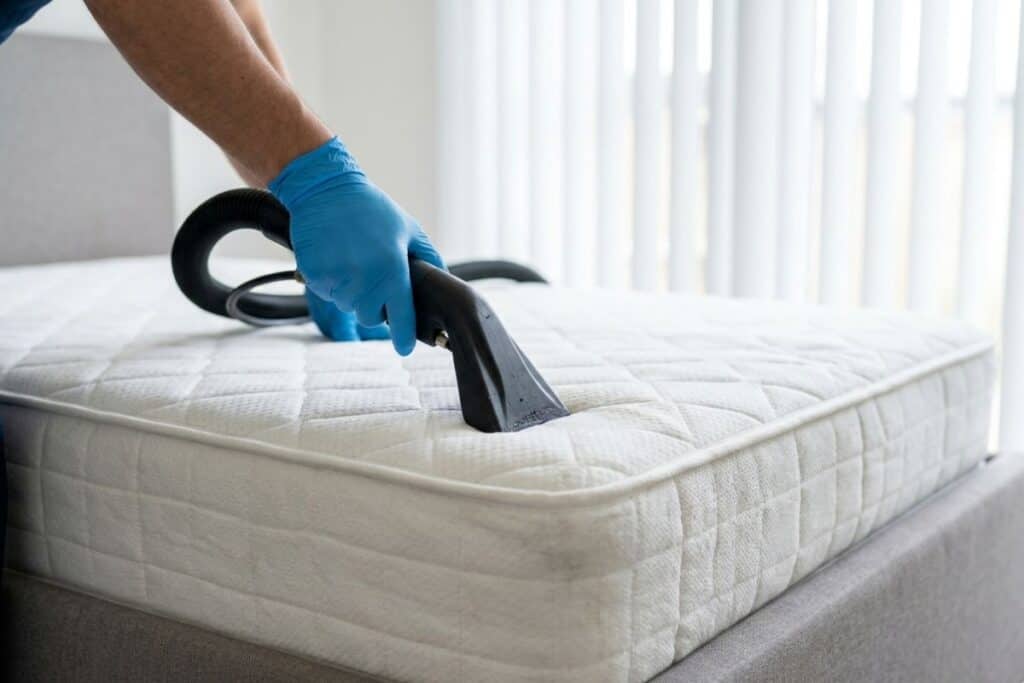
- Schedule professional deep cleaning periodically to extract the embedded buildup that household methods can’t reach.
The first four steps are maintenance you can handle yourself, and they make a real difference. But the fifth step is what truly resets your mattress, because professional low-moisture cleaning penetrates and lifts out the accumulated organic material where mites breed.
Why Choose Tulsa Kwik Dry Total Cleaning
When it comes to mattress and upholstery cleaning in Tulsa, OK, not all methods are created equal. Tulsa Kwik Dry Total Cleaning uses a low-moisture, oxygenated citrus cleaning process that breaks down the body oils, skin cells, and allergen-rich debris that dust mites feed on, then lifts that material away rather than just pushing it deeper. Because our process uses minimal water, your mattress dries in about 1 hour, so there’s no lingering dampness that could invite the very mold and mites you’re trying to eliminate.
We believe in honest, all-inclusive pricing, which means the quote you receive is the price you pay, with no surprise upcharges tacked on at the end. Just as importantly, every job is handled by owner-operator technicians who take genuine pride in their work and treat your home with care. You’re not getting a rotating crew of strangers; you’re getting professionals who are personally invested in the results. For families in Tulsa who want a cleaner, healthier sleep environment without harsh chemicals or long drying times, that combination is hard to beat.
Conclusion
What lives in your mattress is a hidden world of dust mites, bacteria, and allergens quietly thriving on the skin cells and moisture your body provides every night. While you can’t stop the buildup entirely, you can absolutely control it, and the difference it makes to your breathing, allergies, and overall sleep quality is profound. Regular maintenance keeps the problem in check, but a periodic professional deep clean is what truly transforms your bed back into the clean, healthy sanctuary it should be.
Don’t spend another night sharing your bed with millions of tiny tenants. Contact Tulsa Kwik Dry Total Cleaning to schedule your mattress cleaning and start sleeping more easily tonight.
Frequently Asked Questions
Can dust mites bite you?
No. Dust mites do not bite humans or burrow into skin. They feed only on dead skin flakes. Any itching or irritation people experience is caused by an allergic reaction to mite waste and body fragments, not by bites.
How do I know if I have dust mites in my mattress?
You can’t see them, but common signs include waking up congested, sneezing, or having itchy eyes that improve once you leave the bedroom. Worsening allergy or asthma symptoms at night often point to dust mite allergens in bedding and mattresses.
Does washing my sheets get rid of dust mites?
Washing sheets in hot water kills mites living in your bedding, which helps. However, it doesn’t remove the mites and allergens already embedded deep in the mattress, so it’s only part of an effective routine.
How often should a mattress be professionally cleaned?
Most households benefit from professional mattress cleaning every 6 to 12 months. Homes with allergy sufferers, pets, or small children may want to clean more frequently to keep allergen levels low.
Are dust mites dangerous?
For most people, they’re a nuisance rather than a danger. However, their allergens can trigger significant reactions in people with asthma, eczema, or respiratory allergies, sometimes worsening these conditions if exposure stays high over time.