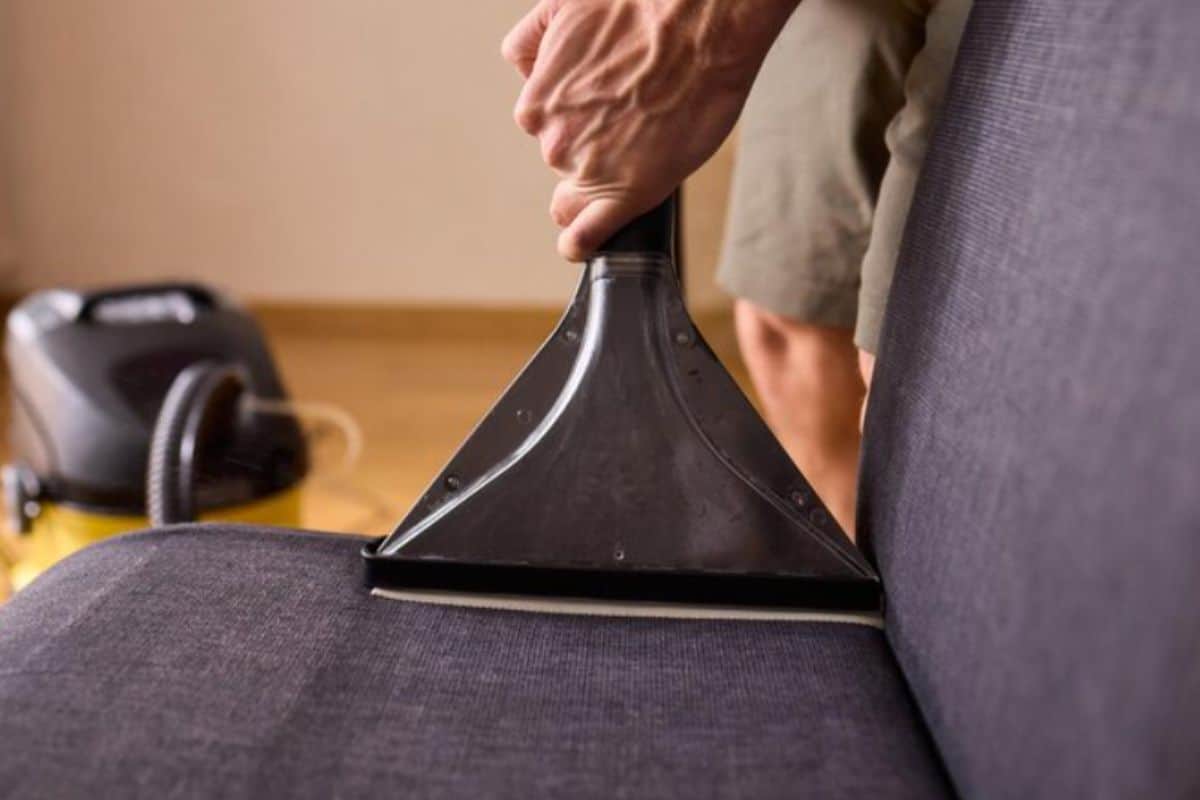
How long does upholstery take to dry after cleaning is one of the first questions every homeowner in Tulsa, OK, asks before booking a service, and it deserves a straight, honest answer instead of a vague “it depends.”
The reason it matters so much is simple: a wet sofa is an unusable sofa, and one that stays wet for too long stops being just an inconvenience and becomes a real problem. Dry time is the single biggest factor that determines whether your upholstery cleaning experience ends with a fresh, beautiful living room or a damp, musty couch you cannot sit on until tomorrow.
The answer ranges widely depending on the method, the fabric, and the conditions in your home, so let’s walk through what actually controls it and what you should expect.
Why Dry Time Matters More Than Most People Realize
When upholstery stays damp for an extended period, several things start happening behind the fabric that you never see. Moisture seeps into the foam padding and wooden frame, and once it reaches those layers, evaporation slows to a crawl.
Within hours, microbial growth can begin, especially in the humid Oklahoma climate that defines much of the year in Tulsa. The result is that musty smell people often mistake for “cleaning product residue.” It is not. It is the beginning of mildew taking hold inside cushions that were never designed to dry from the inside out.
Beyond the health concerns, prolonged dampness can damage furniture. Wood frames swell, joints loosen, foam loses its shape, and natural fibers like cotton and linen can develop watermarks or shrink unevenly. A cleaning meant to refresh your sofa can permanently alter its appearance and feel. This is why dry time is not just about convenience. It is about protecting an investment you likely paid $1,000 or more for.
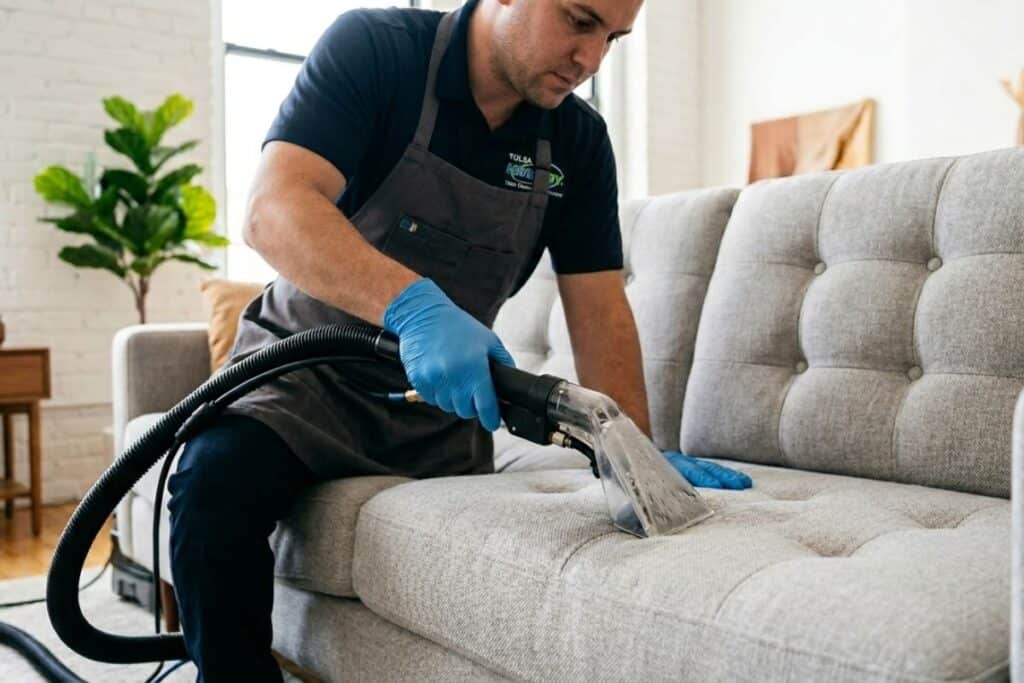
How Long Does Upholstery Take to Dry After Cleaning With Each Method
Drying times vary dramatically based on the cleaning technique used. Traditional hot water extraction, often called steam cleaning, drives large volumes of hot water and detergent deep into the fabric and padding under pressure.
Even with powerful suction extraction, residual moisture remains throughout the cushion. Dry times for this method typically range from 6 to 24 hours, and in humid conditions or with thick fabrics like chenille or microfiber, it can stretch to a full 48 hours.
Dry-foam or shampoo methods use less water than steam, with dry times usually between 2 and 6 hours. The tradeoff is that these methods often leave behind detergent residue that attracts dirt quickly, meaning your sofa may look clean today but appear dingy again within weeks.
Low-moisture, oxygenated citrus cleaning, which Tulsa Kwik Dry Total Cleaning uses, produces the fastest results. Upholstery treated with this process dries in about an hour under typical conditions. The reason is straightforward. Instead of saturating fibers and foam with water, the process applies just enough moisture to activate the cleaning agents, which then lift soil and stains to the surface for extraction. Less water in means less water to evaporate out.
Note that heavily soiled cushions or fabrics treated with a protective coating like Kwik Guard may take a bit longer to fully dry, which is a small tradeoff for stain resistance that lasts months.
Ready to bring your favorite sofa back to life? Call Tulsa Kwik Dry Total Cleaning today for a free estimate.
The Hidden Factors That Change Your Dry Time
Even with the same cleaning method, your specific dry time depends on several variables you may not have considered. Fabric type is the biggest one. Loose-weave fabrics like linen and cotton release moisture quickly, while dense synthetics like polyester, microfiber, and velvet trap water and slow evaporation. Leather, technically not upholstery in the fabric sense, has its own conditioning process entirely and dries within minutes.
Humidity matters enormously, and anyone living through a Tulsa summer knows this intuitively. When indoor humidity exceeds 60 percent, evaporation slows because the air is already saturated with moisture. Running air conditioning, opening windows during dry weather, and using ceiling fans all speed up drying. Conversely, a stuffy, closed room with no airflow can double or triple the time it takes your upholstery to fully dry.
Furniture construction plays a role, too. Tightly stuffed cushions with high-density foam dry slower than down-filled or loosely stuffed pieces, simply because moisture has farther to travel to reach the surface. The age of the fabric also matters, since older fibers tend to be more absorbent than newer, treated synthetics.
Finally, the technician’s experience is the silent variable nobody talks about. A skilled cleaner knows how much solution each fabric can handle, when to make a second pass, and when to stop. An inexperienced tech overspraying a sofa can turn a one-hour dry time into a six-hour one without changing a single product.
Why Choose Tulsa Kwik Dry Total Cleaning
When fast, safe, and genuinely clean upholstery matters to you, Tulsa Kwik Dry Total Cleaning is the company Tulsa, OK, families have trusted for years. Our low-moisture oxygenated citrus cleaning method dries your sofas, sectionals, chairs, and recliners in about an hour, which means no rearranged weekends and no waiting until tomorrow to use your own furniture.
Every cleaning uses an all-natural, green-technology formula that is safe for children, pets, and anyone in the home who deals with allergies or chemical sensitivities. We are locally owned and operated, and the technicians who arrive at your door are owner-operators with a personal stake in doing the job right.
There are no harsh chemicals, no sticky residues, no surprise upcharges, and no problem so stubborn that we will not tackle it. Our cleaning process disinfects as it cleans, includes deodorizing protection, and is backed by a guarantee that if we cannot remove a stain, no one can.
How to Help Your Upholstery Dry Faster at Home
Once your technician leaves, there are a few simple things you can do to keep dry time on track. Turn on ceiling fans or set up a portable fan to direct airflow across the upholstery, since moving air evaporates moisture far faster than still air. Set your air conditioning to a comfortable cool setting, which lowers humidity and pulls moisture out of the air.
Keep cushions slightly separated rather than pushed tightly together so air can circulate on all sides. Avoid sitting on the furniture, replacing decorative pillows, or covering cushions with throws until everything feels completely dry to the touch.
If you can keep pets and children off the furniture for that first hour, you will get the fastest, cleanest result and the longest-lasting freshness. A simple sheet draped loosely nearby as a visual reminder often does the trick in busy households.
Conclusion
Dry time is not a minor detail in upholstery cleaning. It is the difference between a refreshed home and a damp inconvenience that stretches into the next day. With the right low-moisture method, the right technician, and a little airflow, your sofa can be back in service within an hour rather than overnight.
Tulsa Kwik Dry Total Cleaning has built a reputation across Tulsa, OK, for delivering exactly that, combining fast dry times with deep, honest cleaning that leaves your furniture looking new and ready to use.
Stop putting up with dingy, tired-looking furniture. Book your appointment with Tulsa Kwik Dry Total Cleaning and experience how good a one-hour dry time really feels.
Frequently Asked Questions
Can I sit on my couch right after upholstery cleaning?
It is best to wait until the fabric feels completely dry to the touch, which is typically about an hour with low-moisture methods and several hours or longer with traditional steam cleaning. Sitting on damp upholstery can press moisture deeper into the foam and may leave temporary impressions or watermarks.
Why does my sofa still smell damp the day after cleaning?
A lingering damp smell usually means moisture remains inside the cushion foam or frame, often because too much water was used during cleaning or the room had poor ventilation. Running fans, lowering humidity with air conditioning, and separating cushions can help, but persistent odors may indicate mildew forming inside the cushion.
Will my upholstery shrink or change color after it dries?
Quality cleaning methods that match the fabric type rarely cause shrinkage or color change. Risks rise with delicate natural fibers like silk, linen, or older cotton when over-wetted. A reputable cleaner will always test a hidden area first to confirm the fabric handles the process safely.
How often should upholstery be professionally cleaned?
Most furniture benefits from a professional cleaning every 12 to 24 months. Homes with pets, young children, or daily heavy use generally need cleaning every six to twelve months to maintain appearance and prevent permanent soiling from setting into the fibers.
Is it normal for cushions to feel slightly stiff after cleaning?
A very mild stiffness is common, especially when a protective fabric coating has been applied. This usually softens within a day or two as the fibers settle and the coating cures. Persistent stiffness across the whole piece, however, may suggest detergent residue from a previous cleaning that needs a second visit to fully remove.